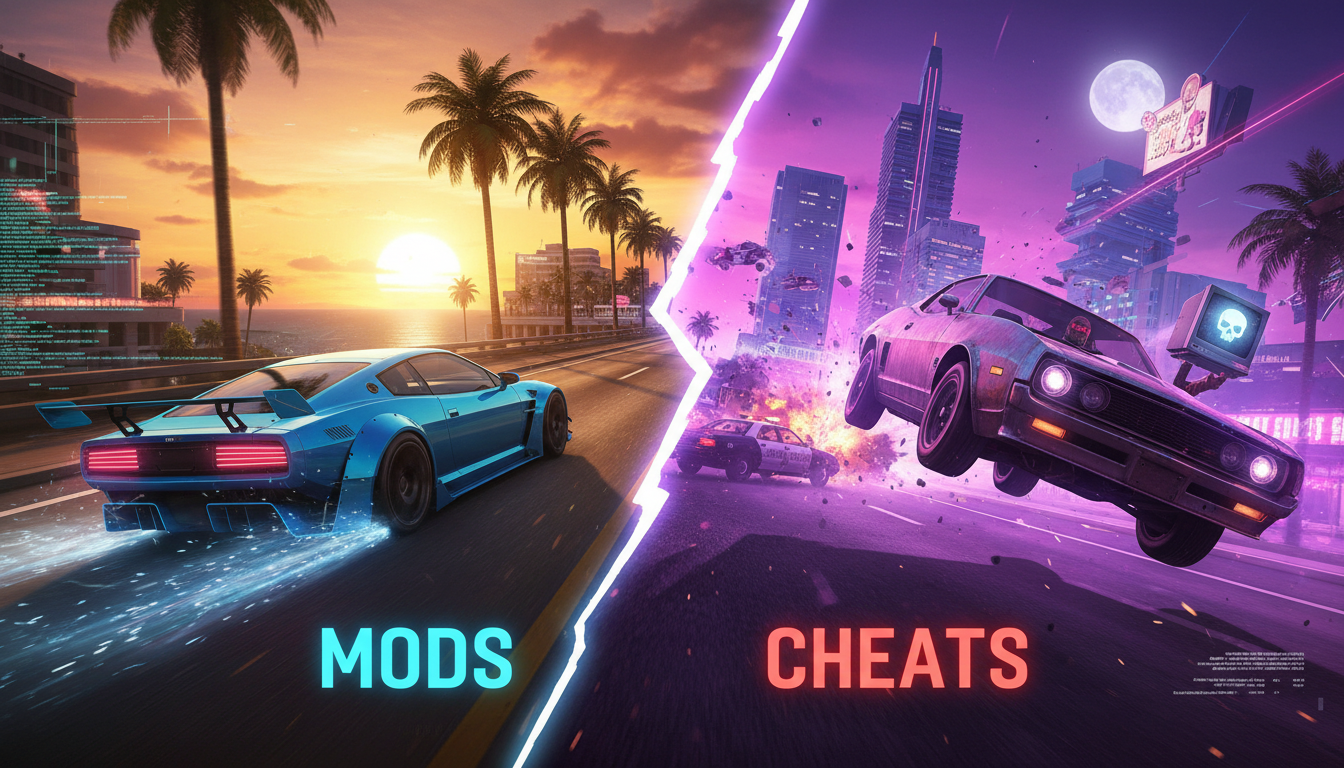
Modding Terminology Explained: Your Complete Guide to GTA 6 Modding Language
If you're new to the world of GTA 6 modding, the terminology can feel overwhelming. This comprehensive modding terminology explained guide breaks down every essential term, acronym, and concept you'll encounter when installing, creating, or troubleshooting mods. Whether you're just starting your modding journey or need clarification on specific terms, this guide will serve as your definitive reference for understanding the language of the GTA 6 modding community.
Prerequisites
Before diving into modding terminology, you should have:
- A legitimate copy of GTA 6 installed on your PC
- Basic computer literacy and file management skills
- Familiarity with extracting compressed files (ZIP, RAR)
- Administrative access to your computer for file modifications
- Willingness to learn and experiment safely with backups
Core Modding Terminology Explained
Essential Terms Every Modder Should Know
When exploring the modding terminology explained gta 6 landscape, these foundational terms appear everywhere:
Mod (Modification): Any user-created content that alters or adds to the base game. Mods can change graphics, gameplay mechanics, vehicles, weapons, or virtually any aspect of GTA 6.
Script: Code written in programming languages like C# or Lua that adds new functionality to the game. Scripts enable complex behaviors like custom missions, enhanced AI, or interactive features.
Texture: The visual surface applied to 3D models in the game. Texture mods change how objects, characters, or environments look without altering their 3D structure.
Asset: Any game resource including models, textures, sounds, animations, or scripts. The term encompasses all the building blocks that make up GTA 6's content.
Vanilla: The unmodified, original version of GTA 6 as released by Rockstar Games. Players often refer to "vanilla game" when discussing default features versus modded content.
File Formats and Extensions
Understanding file types is crucial in this modding terminology explained guide gta 6:
RPF (Rockstar Package File): Rockstar's proprietary archive format that stores game assets. Most GTA 6 content is packaged in RPF files, which require special tools to open and modify.
YTD (Texture Dictionary): Contains texture files for models. When you install a vehicle or character skin mod, you'll often work with YTD files.
YDR (Drawable Dictionary): Stores 3D model data for objects, vehicles, and characters in GTA 6.
YFT (Fragment): Contains destructible object data, determining how things break apart when damaged.
XML (Extensible Markup Language): Human-readable configuration files that define mod settings, vehicle handling, weapon stats, and more.
DLL (Dynamic Link Library): Compiled code that adds functionality to the game through script hooks and mod loaders.
Comparison of Common Modding Tools
| Tool Type | Primary Function | Difficulty Level | Required for |
|---|---|---|---|
| Script Hook | Enables custom scripts to run | Beginner | Most script mods |
| OpenIV | Archive editor for RPF files | Intermediate | Texture/model mods |
| Mod Manager | Organizes and toggles mods | Beginner | Clean mod installation |
| Code Walker | Advanced editing and mapping | Advanced | Custom maps/props |
| Texture Editor | Modifies YTD files | Intermediate | Visual customization |
Installation and Management Terms
Key Installation Concepts
These terms from our modding terminology explained gta 6 guide relate to how you add mods to your game:
Installation Methods:
- Manual Installation: Placing mod files directly into game directories by hand, following specific folder structures and instructions.
- Automatic Installation: Using mod managers or installers that handle file placement and configuration for you.
- Package Installation: Installing pre-packaged mods that include all necessary dependencies and setup scripts.
- ASI Loader Installation: Placing ASI files (modified DLL files) in the game root directory to load plugins automatically.
Mod Conflicts: When two or more mods attempt to modify the same game files or features, causing crashes, glitches, or preventing one mod from functioning properly.
Load Order: The sequence in which mods are loaded by the game or mod manager. Proper load order prevents conflicts and ensures compatibility.
Dependencies: Other mods, scripts, or tools that a particular mod requires to function. For example, many script mods depend on Script Hook V as a foundation.
Backup: A copy of original game files stored safely before modification. Creating backups is critical modding practice that allows you to restore the vanilla game if problems occur.
Advanced Modding Terminology Explained
Override: When a mod replaces default game content with custom content. Vehicle replacement mods override vanilla vehicles with new models.
Add-On: A mod that adds new content without replacing existing game assets. Add-on vehicles appear alongside vanilla vehicles rather than replacing them.
Framework: A foundational mod that other mods build upon, providing shared functionality and standardized systems. Menu frameworks like Menyoo enable countless trainer features.
Trainer: A mod that provides a menu interface for spawning items, vehicles, changing player stats, teleporting, and accessing cheat-like functions for testing or entertainment.
Injector: Software that injects code into the game process while it's running, enabling mods to interact with game memory and functions.
Development and Creation Terms
For Aspiring Mod Creators
If you're interested in creating mods, these terms are essential:
- SDK (Software Development Kit): Tools and documentation that help developers create content for specific platforms
- API (Application Programming Interface): Code interfaces that allow mods to interact with game functions
- Decompiling: Reverse-engineering compiled code to understand how it works
- Hex Editing: Directly modifying binary files at the byte level for advanced tweaks
- Scripting Language: Programming language used for mod scripts (C#, Lua, JavaScript)
- Game Engine: The underlying software framework that powers GTA 6 (RAGE Engine for Rockstar games)
Community and Distribution Terms
Nexus Mods: One of the largest mod hosting platforms where creators share their work and users download mods.
GTA6MODS: A specialized platform dedicated to GTA 6 modifications, offering curated content and community support.
README: A text file included with mods containing installation instructions, credits, changelog, and usage information. Always read the README first.
Changelog: A document listing all changes, fixes, and additions in each version of a mod.
WIP (Work In Progress): Mods still under development, often released as beta versions for testing and feedback.
Port: Adapting a mod from one game version to another, such as bringing a GTA 5 mod to GTA 6.
Troubleshooting Common Issues
When problems arise, understanding these terms helps you diagnose and fix issues:
Crash to Desktop (CTD): When the game suddenly closes without warning, usually caused by mod conflicts or corrupted files.
Infinite Loading Screen: The game gets stuck loading, often due to missing dependencies or corrupted installation.
Missing Textures: Purple, black, or checkered patterns appear when texture files are missing or improperly installed.
Version Mismatch: When a mod was created for a different game version and isn't compatible with your current installation.
Log Files: Text files that record game and mod activity, essential for diagnosing crashes and errors. Common log files include ScriptHookV.log and asi-loader.log.
Quick Troubleshooting Steps:
- Check log files for error messages and specific file names causing issues
- Verify all dependencies are installed and up to date with correct versions
- Test mods individually to identify which one causes conflicts
- Ensure mods are compatible with your current GTA 6 version
- Restore backup files and reinstall mods one at a time systematically
Performance and Optimization Terms
FPS (Frames Per Second): How smoothly the game runs. Heavy mods can reduce FPS, causing stuttering or lag.
VRAM (Video RAM): Memory on your graphics card used for textures and visual effects. High-resolution texture mods consume significant VRAM.
Performance Impact: How much a mod affects game speed and stability. Well-optimized mods have minimal performance impact.
LOD (Level of Detail): How detailed objects appear based on distance. Mods can modify LOD settings to improve performance or visual quality.
Security and Safety Terms
Malware: Malicious software disguised as mods. Only download from trusted sources like GTA6MODS to avoid security risks.
Virus Scan: Always scan downloaded mod files with antivirus software before installation.
Safe Mode: Installing mods in a way that allows easy removal without affecting core game files.
Separate Installation: Creating a duplicate GTA 6 installation specifically for modding, keeping your original installation clean for online play.
FAQ: Modding Terminology Explained
Q: What's the difference between a script and a texture mod?
A: Scripts add new functionality and behaviors through code, like custom missions or gameplay mechanics. Texture mods only change visual appearance by replacing image files applied to 3D models. Scripts are more complex but offer deeper changes, while texture mods are simpler to install and have minimal performance impact.
Q: Why do some mods require dependencies while others don't?
A: Dependencies are shared frameworks that provide common functionality. Instead of every mod creator reinventing basic features, they build upon existing tools like Script Hook. Standalone mods include everything they need, but mods with dependencies are typically smaller files and easier to update when the foundation improves.
Q: What does it mean when a mod is marked as "Add-On" versus "Replace"?
A: Replace mods overwrite existing game content, substituting a vanilla vehicle or weapon with a modded version. Add-on mods insert new content without removing anything, so you keep all original game assets plus the new additions. Add-ons require more setup but preserve the complete vanilla experience.
Q: How do I know if a mod is compatible with my game version?
A: Check the mod description page for version requirements listed by the creator. Most modding terminology explained gta 6 resources emphasize checking version numbers. After game updates, wait for mod creators to release compatible versions or confirm existing mods still work with the new version before updating.
Q: What should I do if I encounter unfamiliar terms not covered in this guide?
A: Join the GTA6MODS community forums or Discord servers where experienced modders can explain specific terms. Most mod README files define specialized terminology they use. The modding community is generally helpful to newcomers who ask respectful questions and show they've made an effort to learn basics first.
Conclusion: Your Next Steps in GTA 6 Modding
Now that you understand essential modding terminology, you're equipped to navigate mod descriptions, installation guides, and community discussions with confidence. This modding terminology explained guide provides the foundation for your modding journey, but practical experience will solidify your understanding.
Start by installing simple texture or vehicle mods to apply these terms in real scenarios. Gradually progress to more complex script mods as your comfort level increases. Always maintain backups, read documentation carefully, and don't hesitate to ask the community for clarification. The GTA 6 modding landscape continues to evolve, so bookmark this guide and return whenever you encounter unfamiliar terminology. Happy modding, and remember that every expert modder started exactly where you are now!